
The IFC, and its members aim towards encouraging the maintenance and enhancement of historic forts, defensive works and military architecture, and the furtherance of knowledge and information thereof. It maintains and furthers contacts between its members, the exchange of their knowledge and experience, and information on activities of its members.
The purpose of the association can be fostered in a variety of ways, but the IFC does not aim at developing the same activities as its members, such as the organization of excursions, journeys, congresses, the edition of a magazine etc.
History
The International Fortress Council (IFC) was founded in 1989 at The Hague (the Netherlands) at the initiative of Stichting Menno van Coehoorn and one of its directors, Carlos Scheltema (1929-2023), an architect and historian who worked on the preservation and restoration of the fortifications of Naarden, for which he had founded the Werkgroep Vesting in 1968. His wife, Elisabeth Anna Maria Vriesendorp (1937–2018), also on the board of Menno van Coehoorn, was a specialist in military history and fortifications. Other organizations interested in the study of fortifications were involved in 1989 in the creation of the IFC : Simon Stevin Vlaams Vestingbouwkundig Centrum -VVC (Belgium), Deutsche Gesellschaft für Festungsforschung – DGF (Germany) and Fortress Study Group- FSG (United Kingdom).
Membership
Membership of the IFC is open to organizations only. Full members of the IFC are active in the whole state in which they are established (or at least representing it), they are open to anyone, and they are not public authorities nor totally dependent on public authorities. Other non-voting membership is open to organizations that are public authority or are totally dependent on public authorities. Organizations and individuals can be invited as observer.
Observers
The IFC welcomes observer members:
Austria : Österreichische Gesellschaft für Festungsforschung (ÖGF)
Finland: Suomenlinna (Governing Body of Suomenlinna, established in 1973, restores, maintains, and provides information about Suomenlinna, a UNESCO World Heritage Site). (project)
Malta : Fondazzjoni Wirt Artna (Malta Heritage Trust)
South Corea : GyeongGi Cultural Foundation, Gyeonggi-do
Full members
The International Fortress Council (IFC) was founded at The Hague (the Netherlands) in 1989 by the following organizations interested in the study of fortifications: Simon Stevin VVC (Belgium; VVC stands for Vlaams Vestingbouwkundig Centrum or Flemish Fortress Centre); Deutsche Gesellschaft für Festungsforschung (DGF, Germany); Fortress Study Group (FSG, U.K.), and the initiator, the Stichting Menno van Coehoorn (The Netherlands; Stichting means Foundation).
Later similar organizations joined the IFC: Association Vauban (France); Nacionalna Udrug za Fortifikacije (NUF, Croatia), Czech Association for Military History (CAMH, Czech Republic), Frënn vun der Festungsgeschicht Lëtzebuerg (FFGL, Luxemburg), Association Saint-Maurice d’Etudes Militaires (ASMEM, Switzerland); Coastal Defence Study Group (CDSG, USA) and the Associação Portuguesa dos Amigos dos Castelos- APAC (Portugal)
See statutes.
The International Fortress Council is a full volunteer organization, which means that no salaries or allowances are granted (see also the financial reports from the Treasurer).
The IFC has several activities :
Annual Meetings
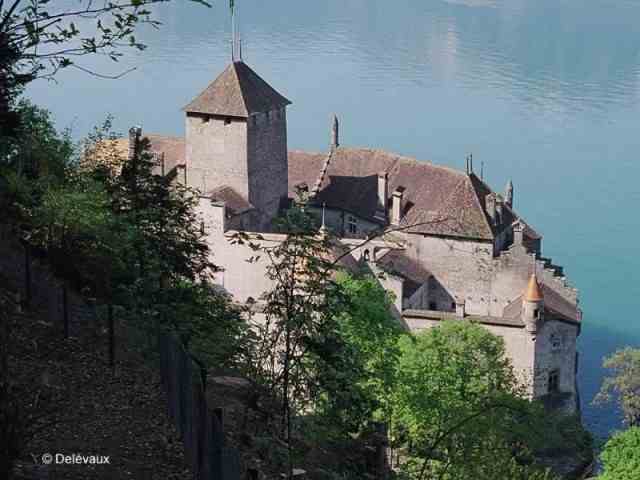
The contacts between the members are sustained by the General Assembly of the delegates once a year, each time in another European town where a member has its seat, and via the secretariat. In 2009 the meeting was in Visegrad Castle of Prague, in 2010 at Saint-Maurice in Switzerland, and in 2011 in the Castle City of Karlovac (Croatia). In 2012 the city of Luxembourg was hosting the meeting. In 2013 the IFC convened in Utrecht (Netherlands). The 2014 meeting was in Portsmouth (UK). In 2015 it was in Antwerp (Fort V) (Belgium), in 2016 in Toulon (France) and in Jülich (Germany) in 2017. The 2018 General Assembly convened in Fort Bard in the Aosta Valley, Savoie, Italy, October 12th. The 2019 General Assembly was on 10th October 2019 in Graz (Austria). Because the COVID Pandemic, in 2020, our annual meeting was organized by videoconference. After this we organized our 2021 meeting in Luxembourg, and in Bergen op Zoom in 2022. For 2023, the members came to Chatham in England close the Thames River and we discovered the place of Namur in 2024. In 2025, the delegates come to Evora (Portugal) and in 2026 the meeting goes to Chinon in the Loire Valley (France)
Expertise
2022 : Some specialists go to the South Corea for a symposium about the Corean Fortifications organize by the GyeongGi Cultural Foundation with a participation fo professionals come to The Netherland (Jereon van der Werf), Germany (Andreas Kupka), France (Nicolas Faucherre) and Belgium (Philippe Bragard). After this symposium the GyeongGi Cultural Foundation edited a publication about Vauban from Nicolas Faucherre in Corean, English and French. They also produced conference proccedings with articles on the conferences these four experts gave during the symposium in Seoul. Two years later, in 2024, they published a book on the fortifications of Naarden written by Jeroen van der Werf. Both publications are in korean and English.
2024 – 2025 : National representatives and observers are, each in their own field, specialists in fortified heritage and carry out their missions in various areas. In addition, these associations bring together experienced professionals (architects, conservators, historians, project managers, site managers, …) . Thus, the strengths of the IFC, in collaboration with Efforts European Federation of Fortifield Sites), actively participate in European research programs, including the Resilient Fortress program which brings together Finland (Governing Body of Suomenlina and Bomarsund, Åland-Fastighetsverk ), The Netherland (Stichting Monumentenbezit), France (Mont-Dauphin – Centre des monuments nationaux et Antibes- Atelier d’Architecture Philippe Prost) and Italy (Forte Tesoro and Forte Aurelia – Studio Architettura Meneghelli). In 2024-2025, the program finalized a guidelines provide a comprehensive framework for the sustainable preservation of fortified monuments and their landscapes. By integrating mineral (stone, mortar) and vegetal (living plants, earthworks) materials and systems, they address the need to safeguard of fortified cultural heritage while ensuring ecological balance and mitigating the effects climate change. This document is the result of a summer school bringing together partners in Suomenlinna, technical visits and study reports, and a symposium held in May 2025 in Naarden. All of this work has led to publications available on the website : https://monumentenbezit.nl/en/publicaties-onderzoek-monumenten/
2026 : A Symposium on the history of fortifications will be organized on, the 7th of May 2026 at Naarden
Newsletters
The IFC sends its members a quarterly newsletter to highlight the activities of our organizations and events, exhibitions, or interesting information to share for the protection of fortified heritage. These newsletters are shared by our organizations with the members of their bodies.
The Calendar
The quarterly calendar “Forttours”, edited in cooperation with the CDSG.
Multilingual Fortification Dictionary
The preparation of a Multilingual Fortification Dictionary (MFD) based on a collection of drawings and pictures.
The Executive Board of the IFC
President: mr. Andreas Kupka
Vice-President: mr. Marc Gayda
Treasurer: Maj Gen. (ret.) Evert Westerhuis
Secretary-general: Jeroen van der Werf
Member: mr Dave Bassett
2-European General Data Protection Regulation The International Fortress Council (IFC), inscribed in the Chamber of Commerce in Utrecht (Netherlands) under number 30223400, is responsible for personal data as stated in this declaration.
IFC can be contacted: www.internationalfortresscouncil.org . Secretariat: Mariaplaats 51, 3511 LM Utrecht (Netherlands), tel. +31 30 2312230,
email: secretariat@internationalfortresscouncil.org.
The secretariat is responsible for collecting and keeping personal data of organisations that are member of IFC. The secretariat follows the European General Data Protection Regulation, incorporated in the Netherlands Data Protection Regulation (Algemene Verordening Gegevensbescherming).
Personal data
IFC collects data on representatives of member-organisations of IFC. The member-organisation implictly agrees when supplying these data. Collected personal data are:
– Address of the member-organisation
– Telephone of the member-organisation
– Email address of the member-organisation
– Name of representatives of the member-organisation
– Telephone of the member-organisation’s representative
– Email address of the member-organisation’representative
Sensitive personal data
IFC has no intention of collecting data on visitors of IFC’s website.
What are personal data used for?
IFC collects personal data to:
– communicate with member-organisation through their designated representative(s)
Automated decisions
IFC does not leave any decision-making to computers or by using computer programmes.